













How Amadeus APIs Help Travel Aggregators Offer More Personalized Deals

The global travel industry is undergoing a rapid transformation driven by shifting customer expectations and digital advancements. According to Statista, the global travel booking market is expected to exceed $1.5 trillion by 2027, up from $800 billion in 2022. Moreover, a McKinsey report highlights that 71% of consumers expect personalized digital experiences, while 76% express frustration when those expectations aren't met. These trends underline the growing demand for tailored travel experiences.
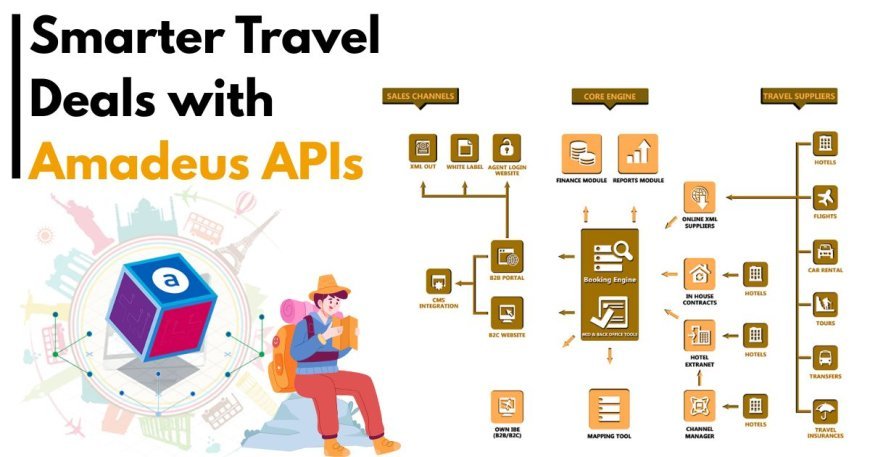
In this environment, travel aggregators must focus on delivering highly personalized offers to stay competitive. Amadeus API Integration provides a robust framework for aggregators to meet this demand. By offering real-time access to vast inventories of flights, hotels, and ancillary services, Amadeus APIs help travel platforms serve personalized, relevant, and timely travel options to users.
What Are Amadeus APIs?
Amadeus APIs are RESTful interfaces developed by Amadeus, one of the world’s leading Global Distribution Systems (GDS). These APIs provide seamless access to:
- Flight search and booking
- Hotel availability and booking
- Car rentals
- Fare predictions
- Ancillary services (e.g., seat selection, baggage)
- Trip purpose classification
Key APIs for Personalization
|
API Name |
Functionality |
Use in Personalization |
|
Flight Offers Search API |
Search and retrieve flight offers |
Filter results by user preferences |
|
Hotel Search API |
Access to hotel availability and details |
Suggest hotels based on previous behavior |
|
Flight Price Prediction API |
Predicts fare increases or decreases |
Alert users on optimal booking times |
|
Trip Purpose API |
Predicts whether a trip is for leisure/business |
Tailor deals based on trip intent |
|
Ancillary Offers API |
Access to baggage, meals, lounge access |
Suggest customized add-ons |
By integrating these APIs, travel aggregators can generate custom travel experiences that match each user's behavior, preferences, and travel context.
Benefits of Personalization for Travel Aggregators
Personalization enables platforms to:
- Increase booking conversion rates
- Improve customer satisfaction and retention
- Enhance upselling and cross-selling opportunities
- Reduce bounce rates and abandonment
Example Benefits
|
Metric |
Before Personalization |
After Using Amadeus APIs |
|
Conversion Rate |
2.5% |
4.2% |
|
Repeat Customer Bookings |
18% |
28% |
|
Average Revenue per Booking |
$320 |
$410 |
These results demonstrate the measurable business value of Amadeus API Integration.
How Personalization Works with Amadeus APIs
1. Profile-Based Personalization
Aggregators can use historical data such as:
- Past bookings
- Preferred cabin class
- Favorite airlines or hotel brands
This data is used to shape Amadeus API queries, ensuring that results reflect the user’s preferences.
2. Real-Time Contextual Matching
Platforms adapt results based on contextual signals, including:
- Current location
- Device type
- Time of day
- Travel seasonality
For instance, a mobile user searching late at night may be shown last-minute hotel deals available nearby.
3. Predictive Recommendations
Amadeus’ Flight Price Prediction API uses machine learning to estimate fare changes. If a user searches for a flight expected to rise in price soon, they can receive an alert encouraging immediate booking.
4. Intelligent Bundling
Using Amadeus APIs, aggregators can dynamically combine services such as:
- Flights + Hotels
- Hotels + Transfers
- Flights + Insurance
These bundled deals provide added value while increasing average order size.
Real-World Scenario: End-to-End Personalized Booking
Consider a frequent traveler named Riya, who regularly books international business trips through a travel aggregator app that uses Amadeus API Integration. When Riya logs in, the platform instantly recognizes her past preferences—such as preferred airlines, departure times, seat selections, and hotel amenities. As she searches for a flight to Singapore, the system automatically prioritizes business class flights with her preferred carrier, displays hotels near her previous business meeting locations, and suggests airport transfers based on her past bookings. Using the Flight Offers Search API and Hotel Search API, the aggregator provides real-time, curated options. Meanwhile, the Trip Purpose Prediction API identifies the journey as business-related, prompting recommendations for Wi-Fi-enabled hotels and flexible check-in/check-out times. At checkout, the Ancillary Services API suggests extra baggage and lounge access—services Riya often chooses. This entire journey, from search to payment, becomes seamless and personalized, improving user satisfaction and increasing the likelihood of conversion for the aggregator.
Case Study: Southeast Asia Aggregator
A mid-sized aggregator in Southeast Asia faced high bounce rates and low repeat user engagement. They integrated Amadeus APIs for flight, hotel, and fare prediction services.
Results after 6 months:
- Conversion rate improved by 32%
- Repeat bookings increased by 25%
- Average revenue per user rose by 18%
The integration enabled them to match users with highly relevant travel options, improving satisfaction and revenue.
Developer Considerations for API Integration
Implementing Amadeus API Integration requires thoughtful planning:
- Authentication: Use OAuth 2.0 for secure API access
- Rate Limits: Monitor usage to avoid service disruption
- Error Handling: Build fallback responses for failed queries
- Caching: Store common results to reduce API calls
- Version Updates: Maintain compatibility with evolving endpoints
These technical elements ensure reliable, scalable personalization across millions of user sessions.
Privacy and Data Security
Personalization depends on collecting and analyzing user data, so privacy is a core concern. Aggregators must:
- Comply with GDPR and regional laws
- Use secure encryption for stored data
- Get explicit consent for preference tracking
- Avoid unnecessary data retention
Amadeus supports these practices with encrypted endpoints and secure data flow, giving aggregators a privacy-safe way to deliver tailored experiences.
Challenges in Implementing Personalization
Despite the benefits, challenges exist:
- Integration Complexity: Connecting multiple APIs requires skilled developers
- Data Quality: Poor or outdated data leads to irrelevant results
- Latency: Real-time personalization can slow down response times
- Dependency: Outages or changes in third-party APIs can affect availability
To mitigate risks, travel platforms should invest in redundancy, regular updates, and testing protocols.
Conclusion
The demand for personalized travel experiences continues to rise. With users expecting platforms to understand their needs, travel aggregators must evolve beyond generic offerings. Amadeus API Integration equips these platforms with the real-time data, predictive intelligence, and customization tools required to succeed.
By adopting these APIs, aggregators can boost engagement, improve booking efficiency, and drive higher revenues. As the travel landscape grows more competitive, those who implement smart personalization strategies will lead the way in delivering next-generation travel experiences.
Frequently Asked Questions (FAQs)
1. What is Amadeus API Integration, and how does it support personalization?
Amadeus API Integration connects travel platforms with the Amadeus Global Distribution System (GDS), offering real-time access to flight, hotel, and ancillary data. By using these APIs, aggregators can tailor search results and travel recommendations based on user behavior, preferences, booking history, and travel context—enabling hyper-personalized experiences.
2. Which Amadeus APIs are most useful for delivering personalized travel experiences?
Key APIs include:
- Flight Offers Search API – for personalized flight results based on filters like cabin class and airline preference.
- Hotel Search API – to suggest accommodations matching user’s previous stays or preferred amenities.
- Trip Purpose API – to adapt offers based on whether a trip is for leisure or business.
- Ancillary Offers API – to suggest personalized add-ons like baggage or seat upgrades.
3. How do travel platforms use predictive capabilities with Amadeus APIs?
The Flight Price Prediction API uses historical fare data and machine learning to forecast price trends. Platforms can notify users when to book or wait, thereby building trust and increasing conversion rates through smarter, data-backed suggestions.
4. What are the main technical considerations when integrating Amadeus APIs into a travel platform?
Key considerations include:
- Secure authentication using OAuth 2.0
- Handling rate limits and API errors gracefully
- Caching frequently requested data to reduce latency
- Keeping up with version changes and documentation
- Ensuring API calls align with GDPR and data privacy compliance
5. How do Amadeus APIs help improve revenue for travel aggregators?
By delivering highly relevant offers and bundles (e.g., flight + hotel + transfer), Amadeus APIs increase the likelihood of upselling and cross-selling. Platforms that personalize offers see higher booking rates, greater average order value, and improved customer loyalty, all contributing to sustained revenue growth.
What's Your Reaction?